
Here’s a brief excerpt of your marathon experience, capturing the essence of the first half and setting the stage for the second:
The first half of the marathon was a test of energy, strategy, and resilience. Starting strong, I paced myself up the initial steep hill while runners surged past—knowing it was too early to exhaust myself. By the 20K mark, I still felt good, buoyed by adrenaline and energy reserves, even as my knee began to remind me of the strain. The cheering crowds along Brighton Pier added motivation, pushing me to keep pace and hold my position ahead of the 4-hour pacers.
The second half of the marathon truly marked the beginning of the battle. At the 20-kilometer mark, I still felt energized and determined, but my knee was beginning to show signs of wear. I took a painkiller to manage the discomfort and focused on using the downhill terrain to my advantage, letting momentum carry me to a strong pace, still hopeful for a sub-4-hour finish. As I neared Brighton Pier, the cheering crowds grew denser, their energy lifting my spirits and pushing me forward. Despite the increasing strain, I pressed on with unwavering determination, knowing there was still a long way to go.
As I ran, I wondered about a fellow runner I had met earlier, someone who had only ever completed a half marathon before taking on this daunting challenge. The thought that he might be struggling made me reflect on the mental and physical resilience required for such an undertaking. By the 24-kilometer mark, I found myself on Madeira Drive—a place with past memories of the London to Brighton bike ride. This section, a long 5K loop out and back, was a mental and physical grind. Spotting the 4-hour pacers behind me gave me a burst of motivation; I needed to stay ahead of them.
The climb continued up to 29 kilometers, where exhaustion began to set in. As I neared the finish line area, I felt the cruel irony of being so close yet having another loop to complete. Seeing runners bent over, medics aiding exhausted competitors, and people collapsed on the ground drove home the harsh reality of marathon running. At this point, my own physical limits were becoming glaringly obvious—I desperately needed a portable restroom and started scanning for one, adding yet another layer of mental strain.
By the time I hit 30 kilometers, I was running through small high streets lined with supportive locals offering fruit, sweets, and biscuits. While tempting, I refrained, knowing my body needed focus, not distractions. My legs began to cramp, particularly my calves, and any attempts to pick up the pace were met with sharp protests from my muscles. The cramps forced me to slow down, keeping my pace low and steady. At the 33-kilometer mark, I felt some relief as the route turned back toward the finish area, but I was acutely aware that every step brought new pain and a fresh challenge.
Passing the 35-kilometer mark, the 4-hour pacers overtook me. I tried desperately to keep up, but the cramps had spread to my quads, and my body refused to comply. Spotting a toilet near a park offered brief relief, but the realization that my sub-4-hour goal was slipping away stung deeply. My energy levels were still decent, but my body felt like it was on the verge of collapse. In that moment, I thought about David Goggins and his relentless drive to push through pain and adversity. If he could do it, I had to dig deep and find a way to keep going.
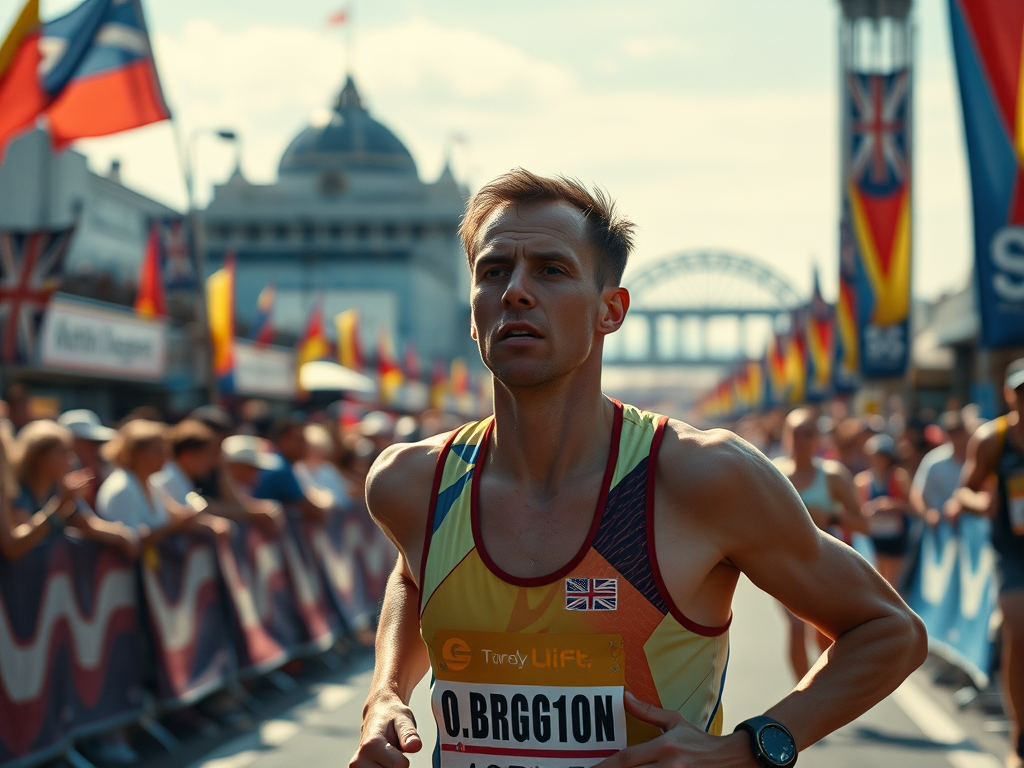
The final stretch felt endless. Each step was an exercise in sheer willpower as I battled through cramping and fatigue. At around the 40-kilometer mark, I saw what I thought was the finish line, only to realize it was still some distance away. Frustration and exhaustion mixed as I pushed myself forward, one labored step at a time. The crowd’s cheers grew louder, but I barely registered them; my focus was solely on crossing that elusive finish line. Finally, as I passed the true finish, I could hardly believe it was over. I asked a nearby usher to confirm that I had indeed finished, and his affirmative response brought a wave of relief and emotion.
Collapsing at the bag collection area, I tried calling my wife but was struck by the sight of runners strewn across the ground, exhausted and stretching. When I finally reunited with my wife and friend, we captured a few photos with my medal. The reality of finishing the marathon hadn’t fully sunk in. As we made our way back to the bus, I noticed runners still struggling at the 30K mark—an inspiring testament to their grit and determination. These runners, fighting through immense pain and exhaustion, embodied the true spirit of marathon running.
In those final kilometers, people were passing me with a stride that made it look like they were out for a Sunday stroll. Watching them cruise by while I pushed every ounce of energy and willpower I had left was humbling and frustrating. But it also reminded me that every runner has their own journey, their own battles to fight.
Jen’s post-race feedback resonated deeply. “Well done again! A marathon is never easy,” she wrote, acknowledging the physical and mental challenges of the day. Her advice to focus on recovery, rest, and nutrition served as a reminder of the journey I had undertaken. Reflecting on my initial goals—reaching the start line, finishing the race, and enjoying the training—I realized how far I had come. The sub-4-hour goal may have slipped away, but managing cramps and pushing through demonstrated a resilience I hadn’t known I possessed. The thought of doing another marathon? A daunting yet tantalizing prospect.
This experience was about more than just crossing the finish line; it was a journey of self-discovery, pushing boundaries, and embracing the highs and lows of the human spirit. The marathon tested every ounce of strength I had, but it also showed me the power of perseverance and the support of those around me. For anyone considering their own marathon or personal challenge, know that the road will be tough—but every step is worth it.
 Running Rebooted
Leave a comment